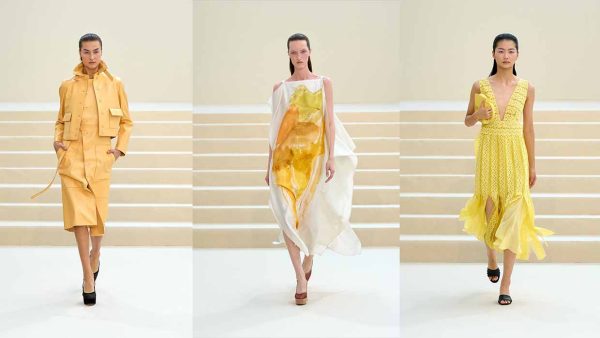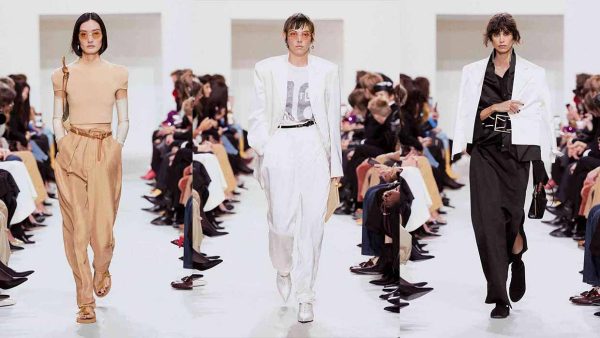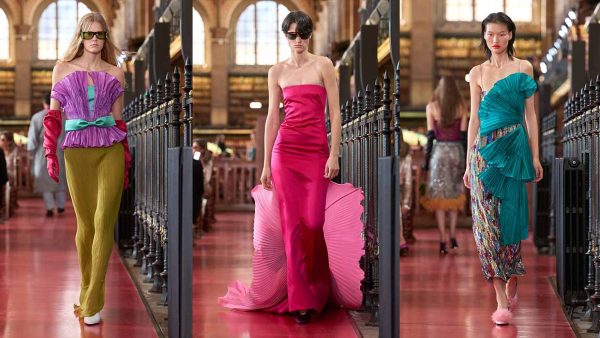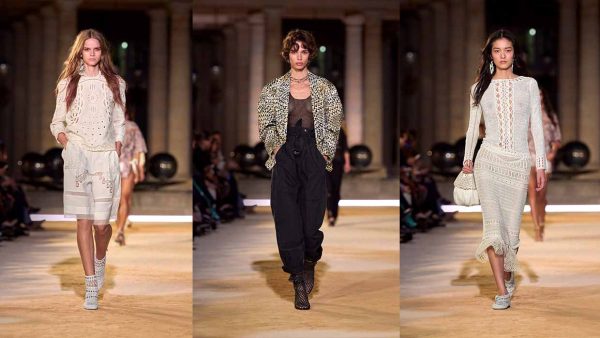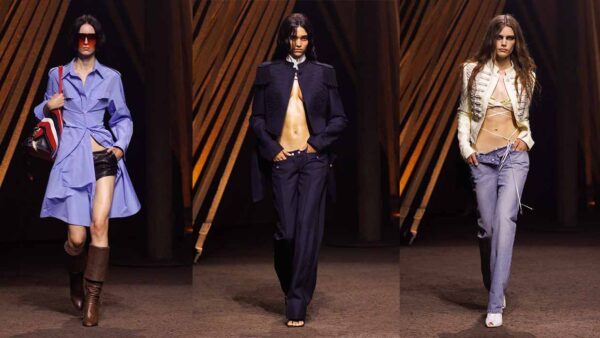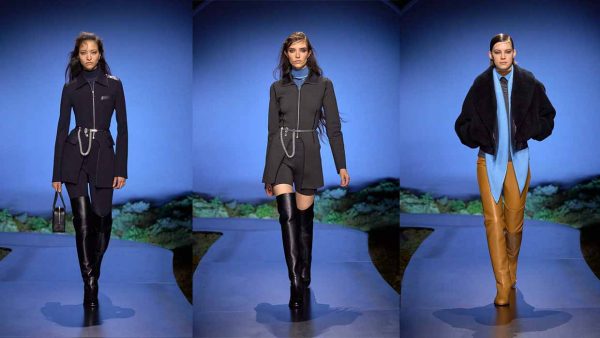


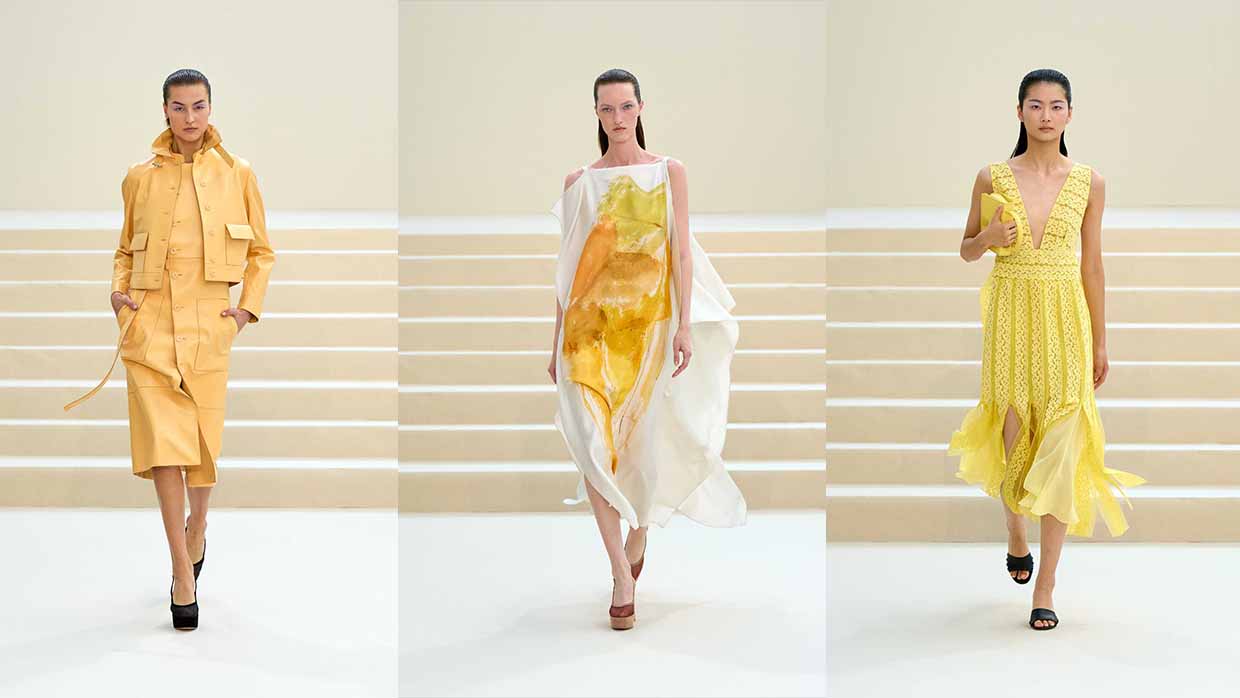
For spring/summer 2027, Akris creative director Albert Kriemler looks to the paintings of Austrian artist Martha Jungwirth, translating her instinctive brushstrokes, unconventional colour combinations and layered compositions into a collection built around movement, texture and the relationship between clothing and the body. Presented during Paris Fashion Week, the result marks a departure from the more restrained side of the house’s aesthetic. There is greater freedom here, although Kriemler never entirely relinquishes his instinct for precision.
Colour sets the pace. Reds, pinks and violets dominate the opening looks, followed by sienna, mauve and painterly multicoloured patterns. Later, the palette shifts towards ecru, greige and black, before opening into cerulean, sage, mint, yellow, orange and peach. The progression is ambitious, occasionally even exuberant. Rather than relying on colour as a finishing touch, Kriemler gives it a structural role, allowing saturated shades and blurred patterns to determine the character of individual looks.
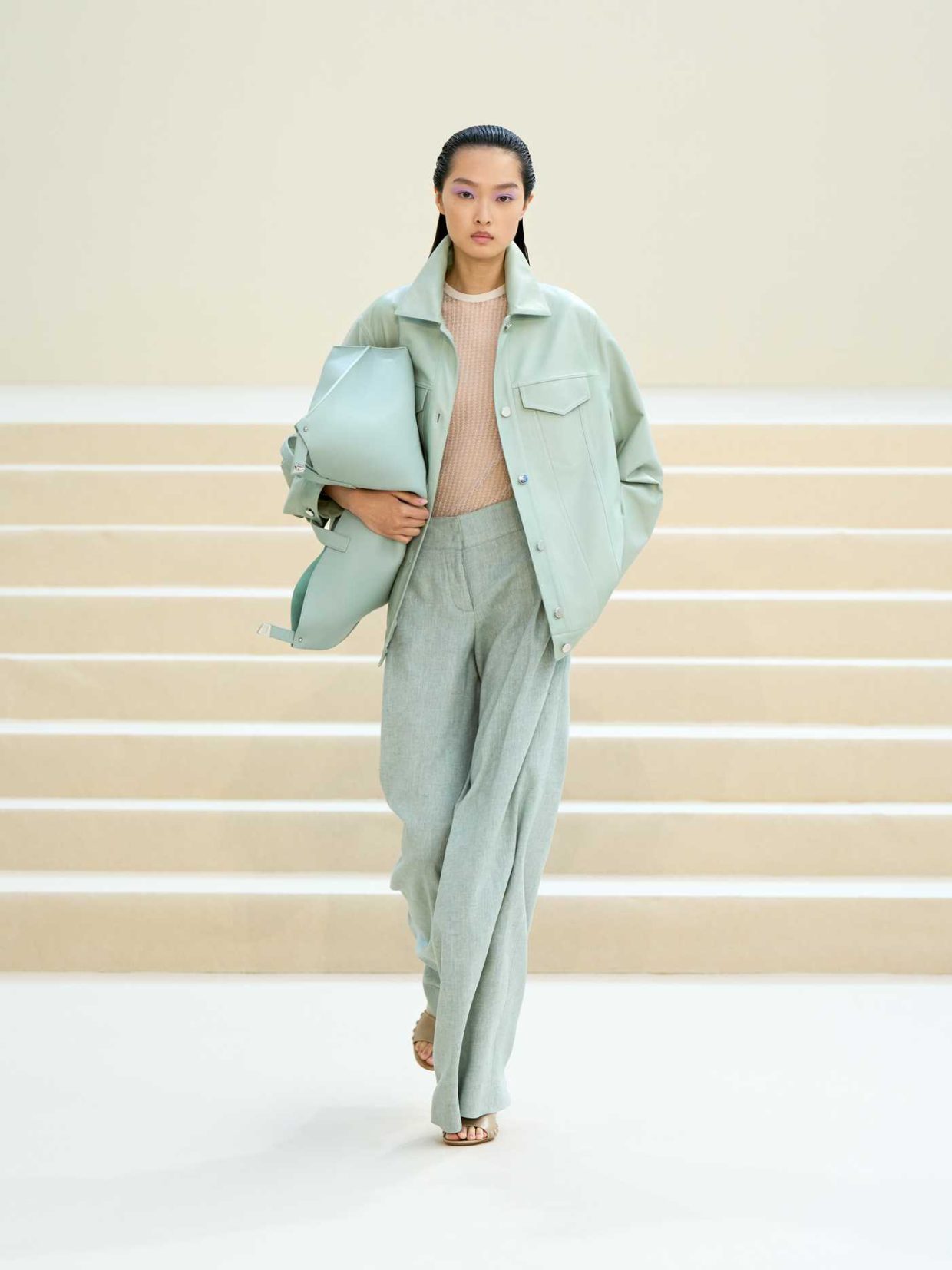
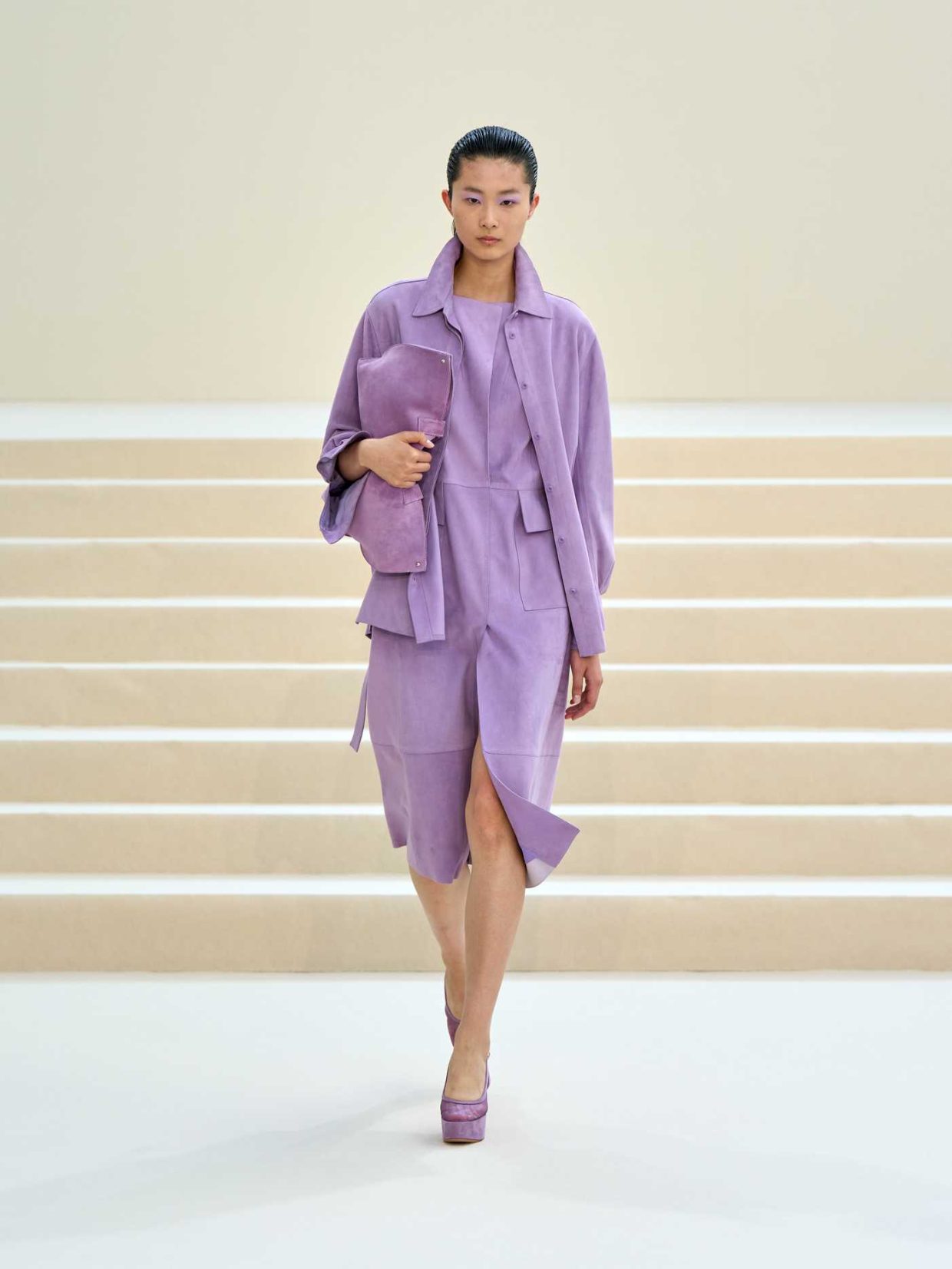
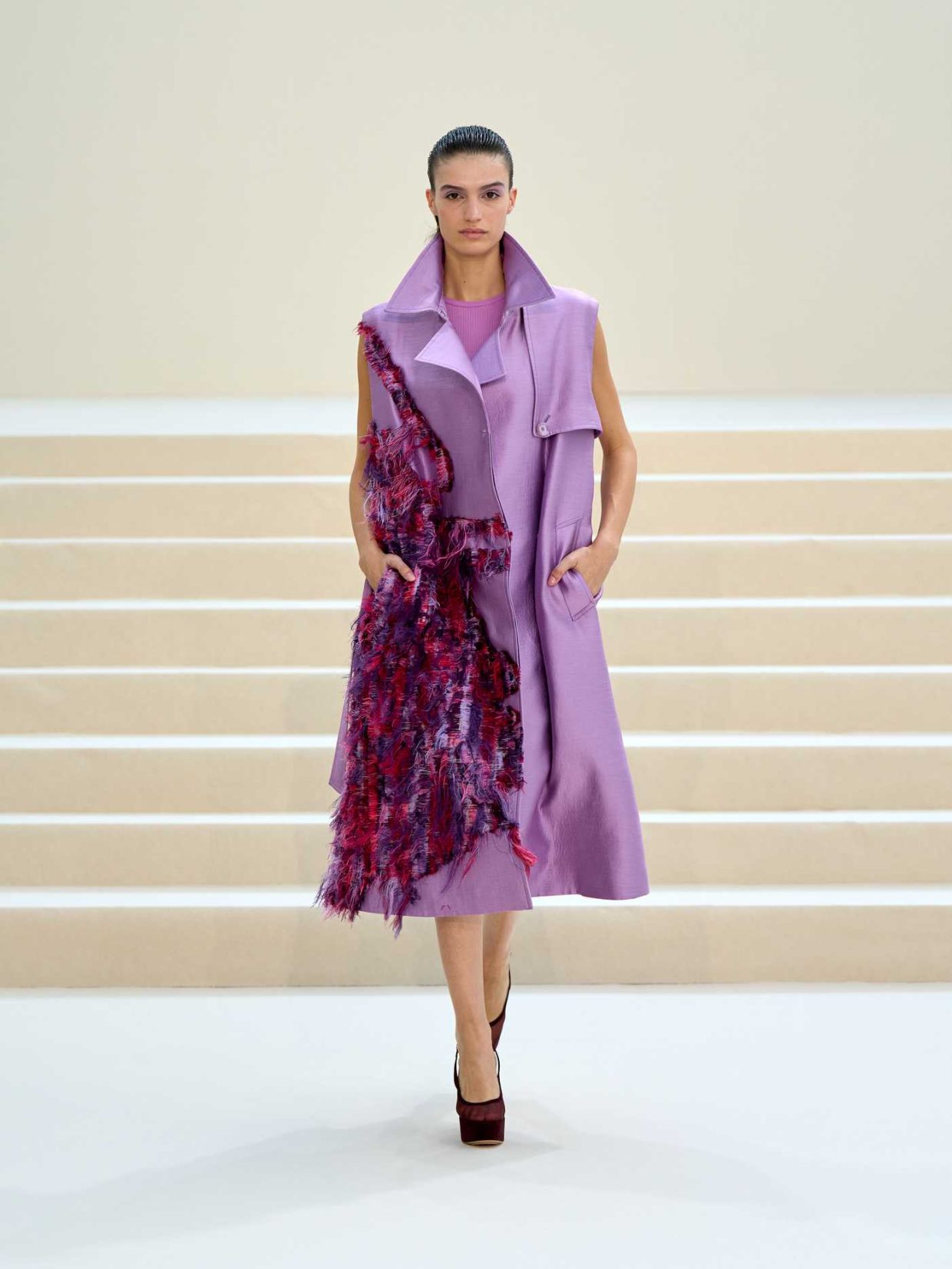
The treatment of fabric is where the collection becomes particularly interesting. Tailoring is loosened without losing its definition, while lightweight knits introduce transparency and irregularity. Silk organza, silk crêpe and satin are combined with wool double-face, suede and lamb nappa leather. Sheer and opaque surfaces repeatedly collide, creating garments that respond to movement rather than simply maintaining a fixed silhouette. This is a more convincing interpretation of Jungwirth’s work than a literal reproduction of her paintings would have been.
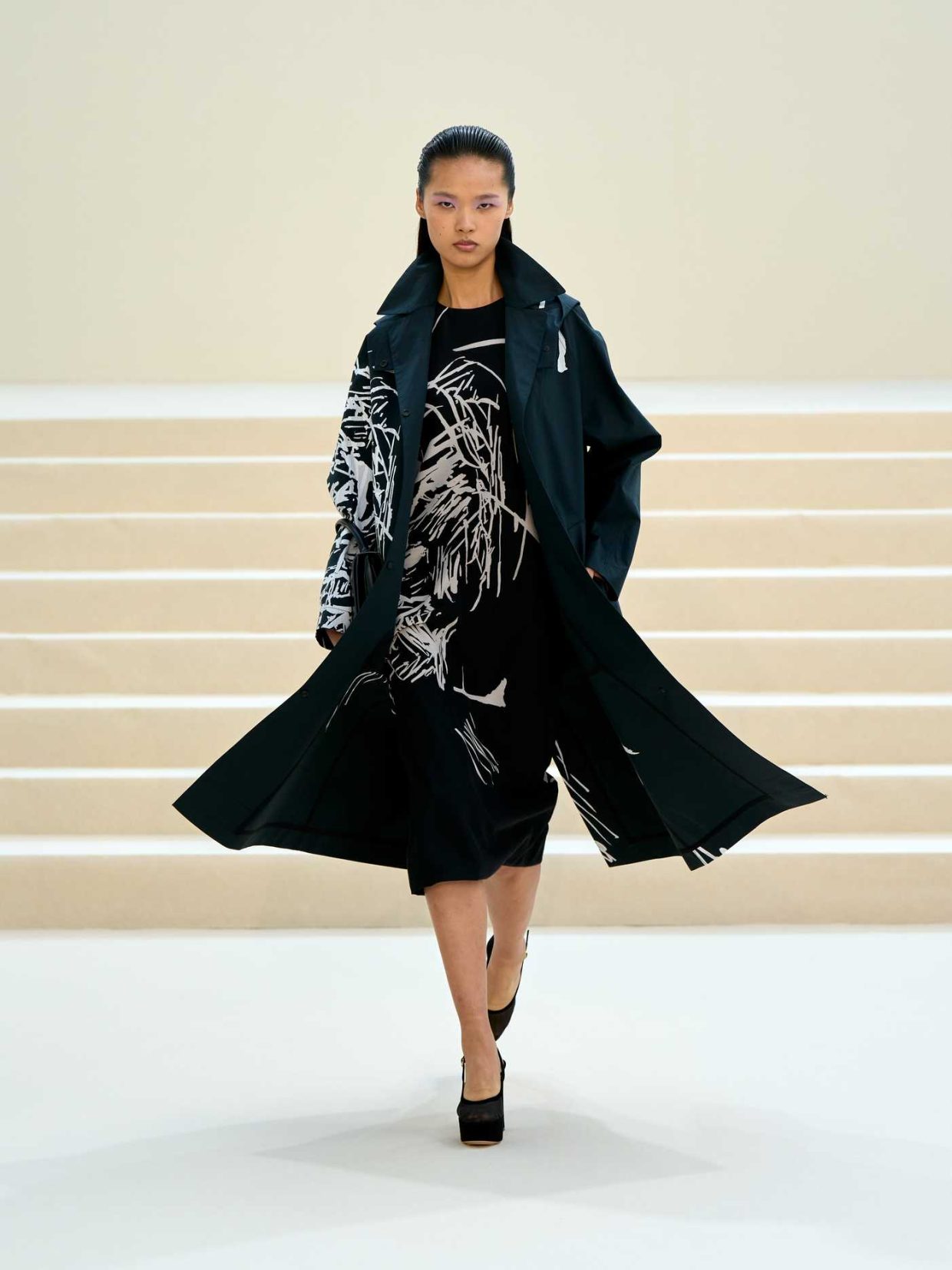
Construction details reinforce the idea. Hand-applied ribbons follow irregular paths across garments, recalling the artist’s brushstrokes, with loose ends left to dangle. Laser-cut fringe is used in unexpected configurations, while reversed jacquards expose their inner workings. Frayed threads and open structures remain visible rather than being concealed by immaculate finishing. The imperfections are deliberate. They give the clothes a physical quality that is often missing from collections built around artistic collaborations.
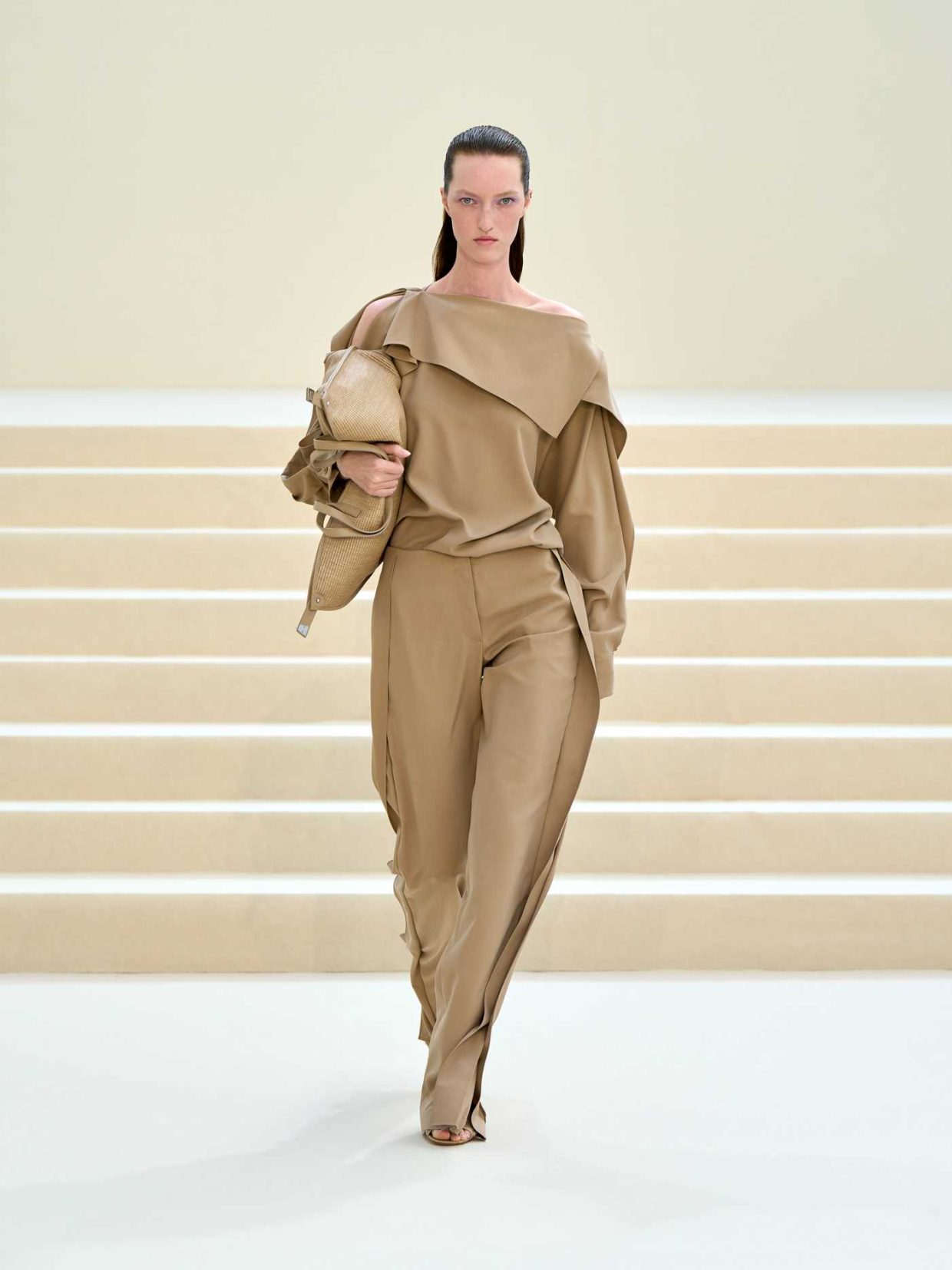
The apron is perhaps the collection’s most distinctive recurring element. Reworked in delicate knitwear, silk organza and suede, it becomes an independent layer, suspended from the body by long sashes and loose ties. The reference connects Jungwirth’s working wardrobe with the history of Akris itself. Several pieces feature embroidered ribbons recalling a design created by Alice, Albert Kriemler’s grandmother, in the 1950s. It is a thoughtful connection, and more compelling than a straightforward archival reference: the past is incorporated into the clothes rather than simply quoted.
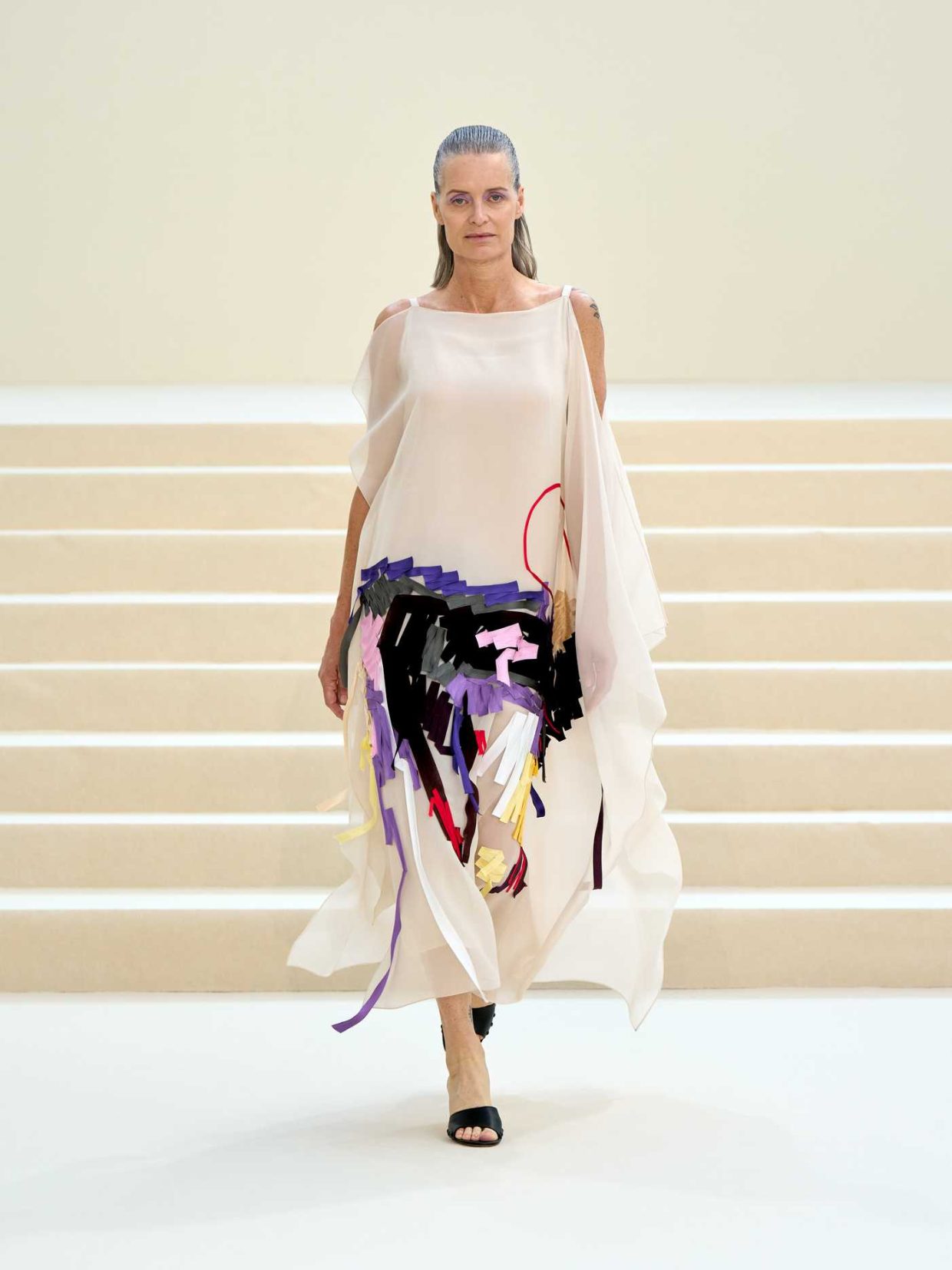
Silhouettes remain fluid and predominantly elongated. Open-back gowns, asymmetrical hems and cascading panels give dresses and skirts a sense of movement, while wide-leg trousers with front pleats provide a more tailored counterpoint. Jackets are softened by peplum flaps, drawstring waists and relaxed proportions. Gilets and trench-inspired coats add structure, although the collection is at its strongest when that structure is allowed to dissolve into the movement of the fabric.
Jungwirth’s imagery also appears in the textiles themselves. Senso motifs are translated into fringed techno cotton-silk jacquards and flowing silk prints; brushstroke patterns appear on silk organza and cotton-silk jackets. Other references include Goya’s Dog, Cambodia and Deikoon, interpreted through jacquards, prints and embroidered applications. Ribbon and stone appliqués inspired by Goya’s Dog bring additional texture to selected garments. Some of these treatments are striking, although the more literal artistic references occasionally risk becoming decorative exercises. The freer use of colour and texture is ultimately more persuasive.
Leather introduces a firmer dimension. Lamb nappa jackets and suede separates sit alongside fluid trousers and asymmetrical skirts, while cotton Sea Island denim appears in a jacket and midi skirt combination with a cascading hem. These pieces broaden the collection beyond its more ethereal gowns and transparent layers, giving it a practical wardrobe dimension without sacrificing its visual identity.
Accessories follow the same material and colour vocabulary. The Anna, Ai, Anouk and Alice bags appear in alcecalf leather, suede, raffia, canvas and horsehair, with selected versions carrying embroidered motifs or ribbon applications. They are integrated into the collection’s visual language, although the clothes remain the main event.
Across 55 looks, Kriemler builds a collection that is less about translating paintings into fashion than about borrowing an artist’s way of working: instinctively, physically and without excessive concern for perfect symmetry. Its strongest moments come when this freedom is expressed through construction, movement and the behaviour of fabric, rather than through the application of recognisable artistic motifs. Akris remains recognisably Akris, but here its precision has a little more room to breathe.