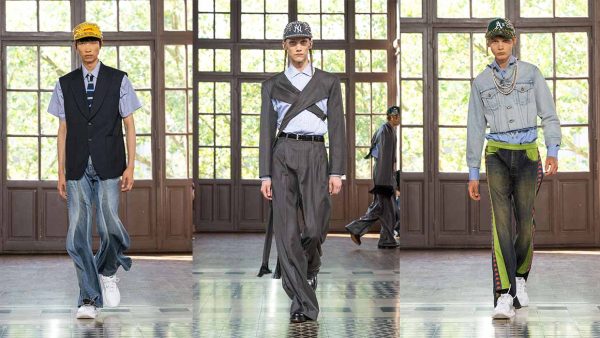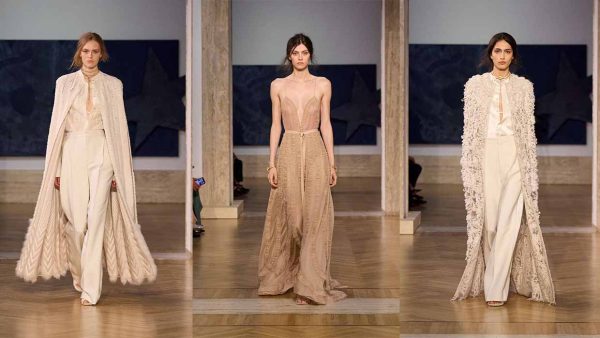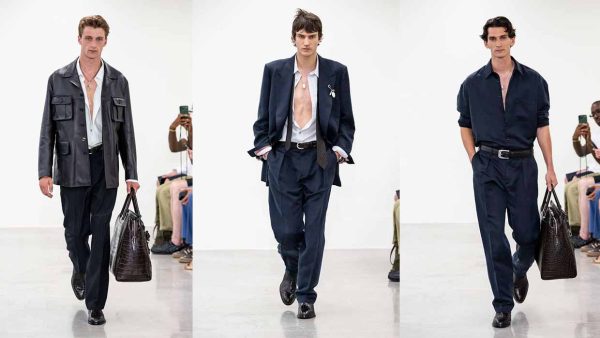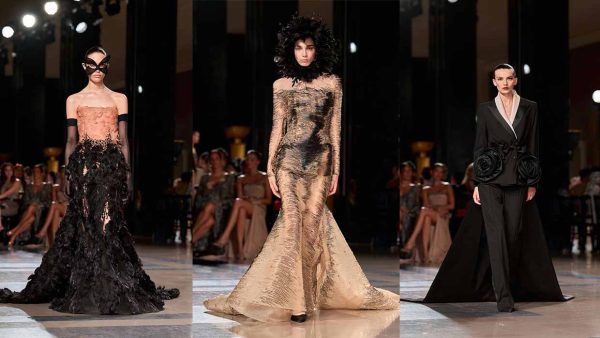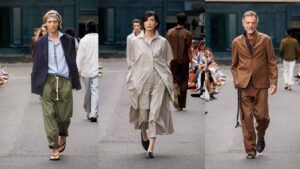
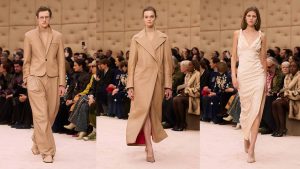
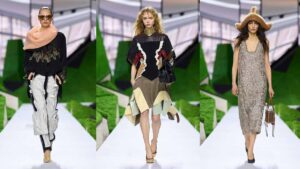
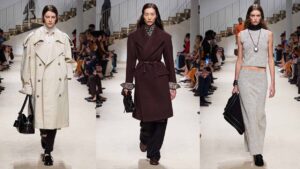

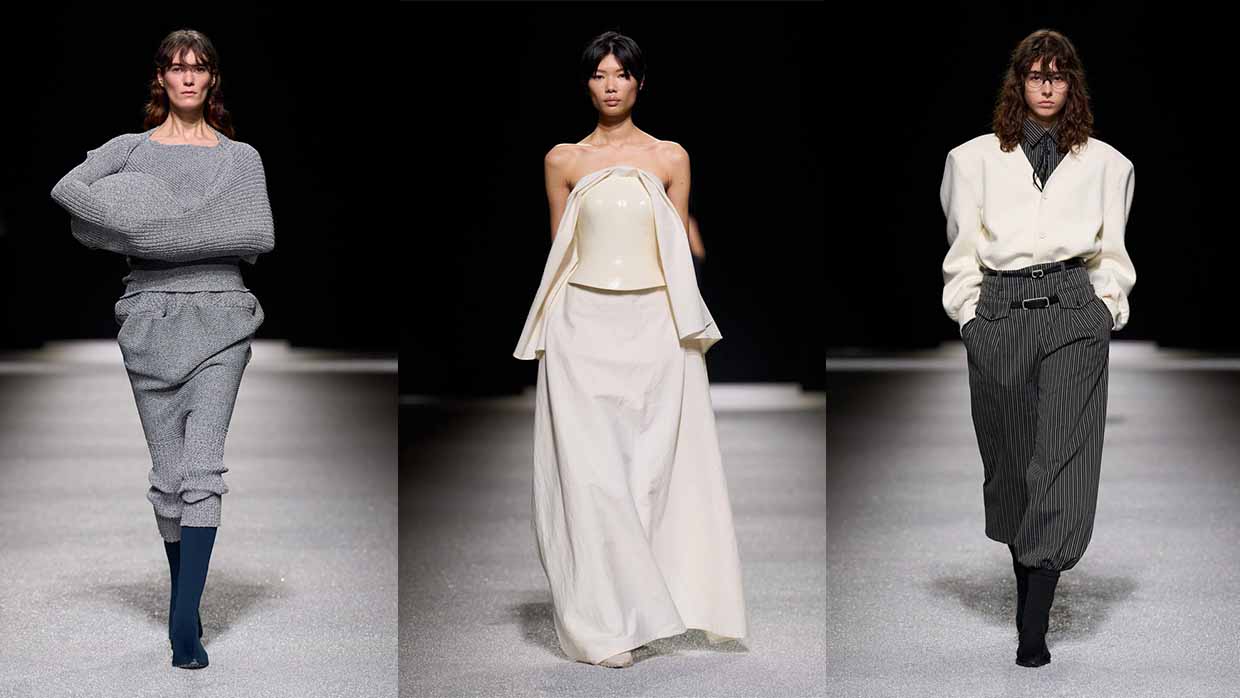
On a Friday in early March, at the Carrousel du Louvre, ISSEY MIYAKE unveiled its Autumn Winter 2026/27 collection – Creating, Allowing. What unfolded was not merely a runway presentation, but a meditation on presence, absence, and the delicate tension between intention and release.
At the heart of the collection lies a question both philosophical and deeply material: how far should a designer go in shaping a garment? And when does restraint – an intentional incompleteness – become the very condition through which beauty emerges? This duality forms the quiet pulse of the collection, where creation and allowance exist not as opposites, but as intertwined forces.
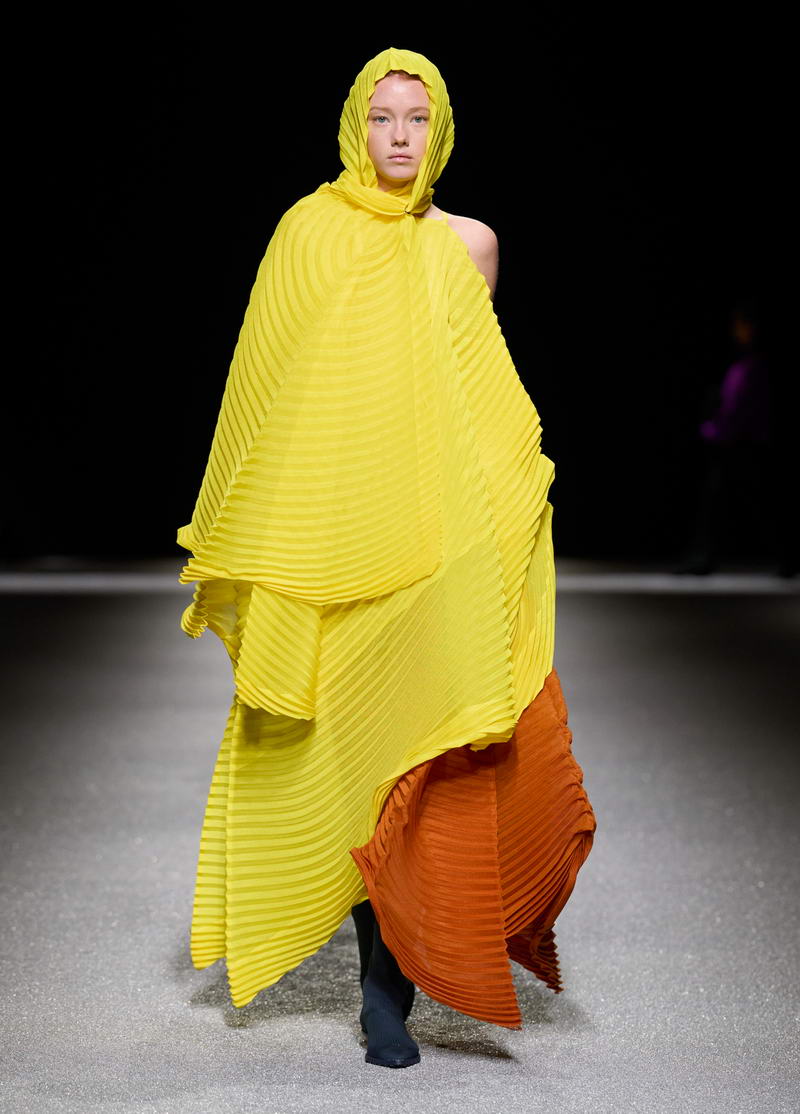
The runway itself embodied this dialogue. A layer of fine, silvery sand stretched across the floor, its stillness interrupted only by the first step of a model. With each passage, the surface shifted – marked, transformed, shimmering in response. This evolving terrain, composed of crushed ore-like sand and finely shredded aluminum foil, became a living interface between material, body, and garment. It was a space where interaction generated meaning, where disruption revealed new relationships.
Within this environment, the garments spoke in subtle yet profound ways. FOUND STONE emerged as a knit series inspired by the quiet presence of a stone discovered by chance. Through seamless knitting techniques, rib, garter, and mesh structures converged into forms that echoed natural textures. Twisted polyester yarns in differing colors created a rough, stone-like surface, while the mesh construction lent unexpected lightness – a balance between weight and air.
In ALLOW, the act of dressing became an act of co-creation. A single piece of cloth, zipped into a tube, transformed into a three-dimensional draped form when worn. Here, the body itself completed the design. The fabric – woven from stretch yarn and washi-blend yarn – carried a subtle, heathered texture, its structure defined as much by absence as by presence.
The dialogue between control and release continued in HANDSOME KNIT, where a tailored, jacket-like shoulder disrupted the inherent softness of knitwear. This sculptural intervention, supported by a dual-layer construction of wool and recycled polyester, introduced a new silhouette – structured yet responsive.
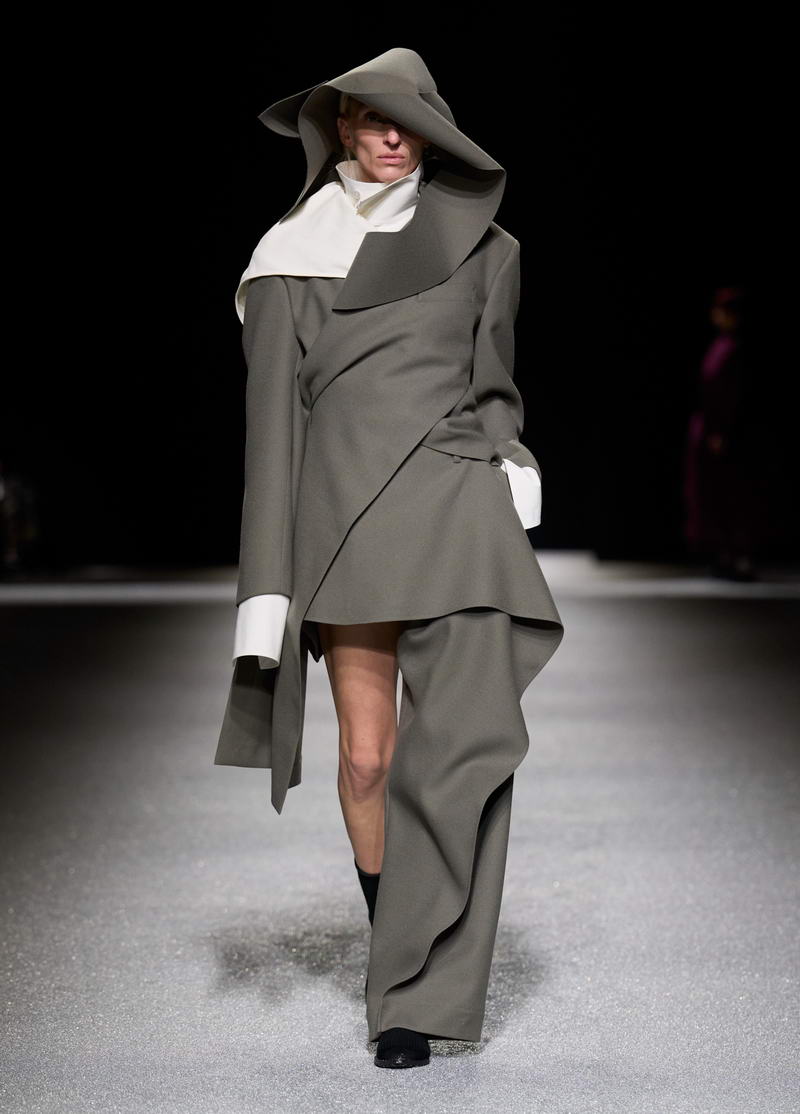
UNTITLED pushed the question further: when is a garment truly complete? A large piece of fabric, intentionally left as if unfinished, explored the boundary between completion and incompletion. Crafted from resin-treated wool, the textile held both suppleness and strength, its elegant sheen and depth of color emphasizing the organic beauty of drape.
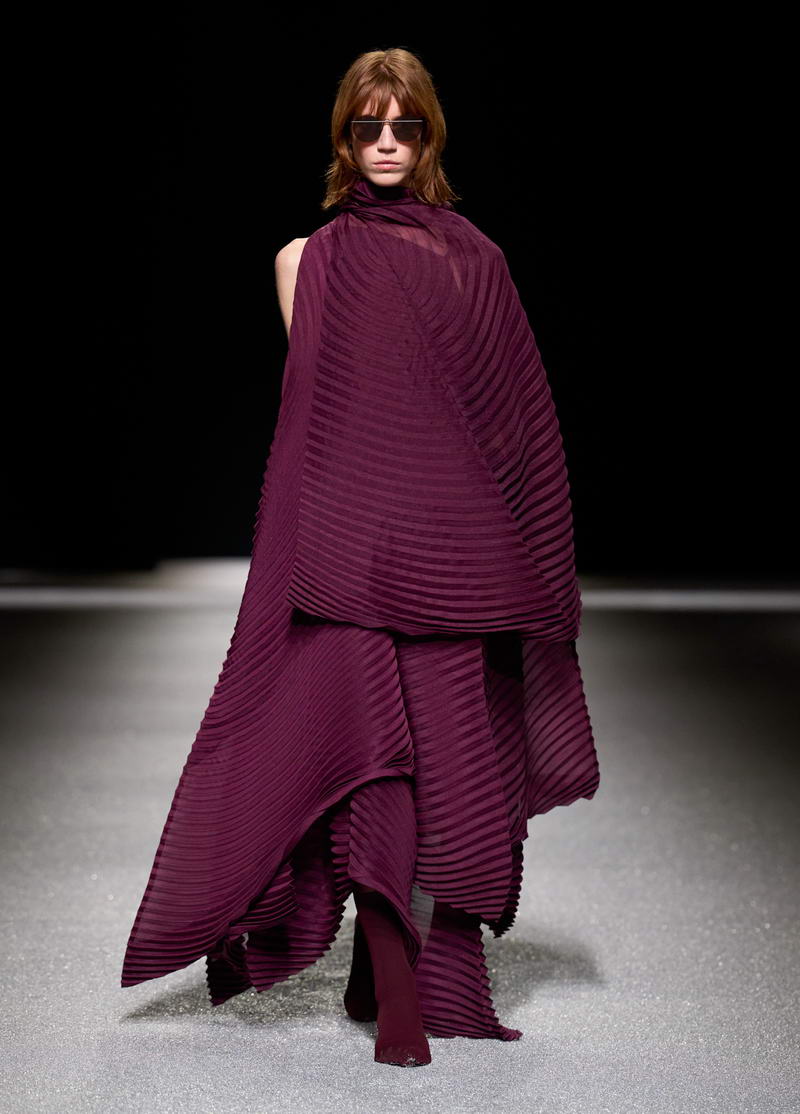
Movement took on a tactile dimension in WRING PLEATS, where hand-wrung twists met machine precision. The resulting pleats rippled across the body, their lustrous polyester surface capturing light and shadow in constant motion, evoking something almost elemental.
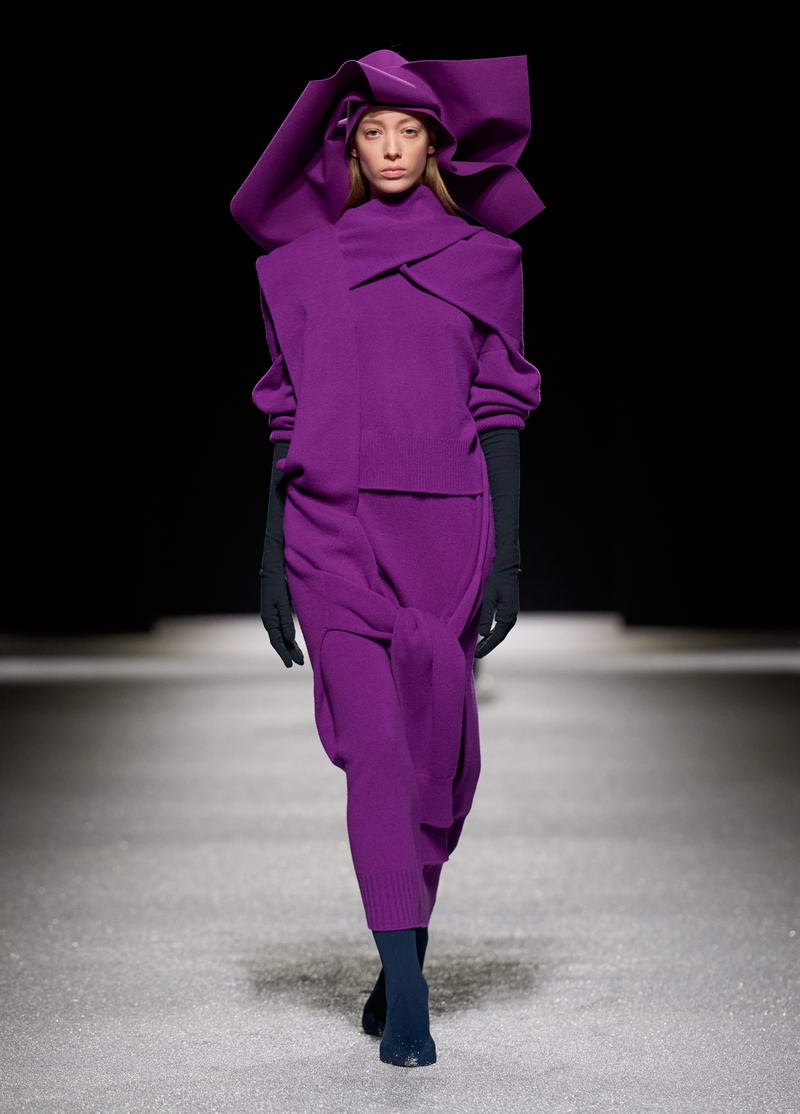
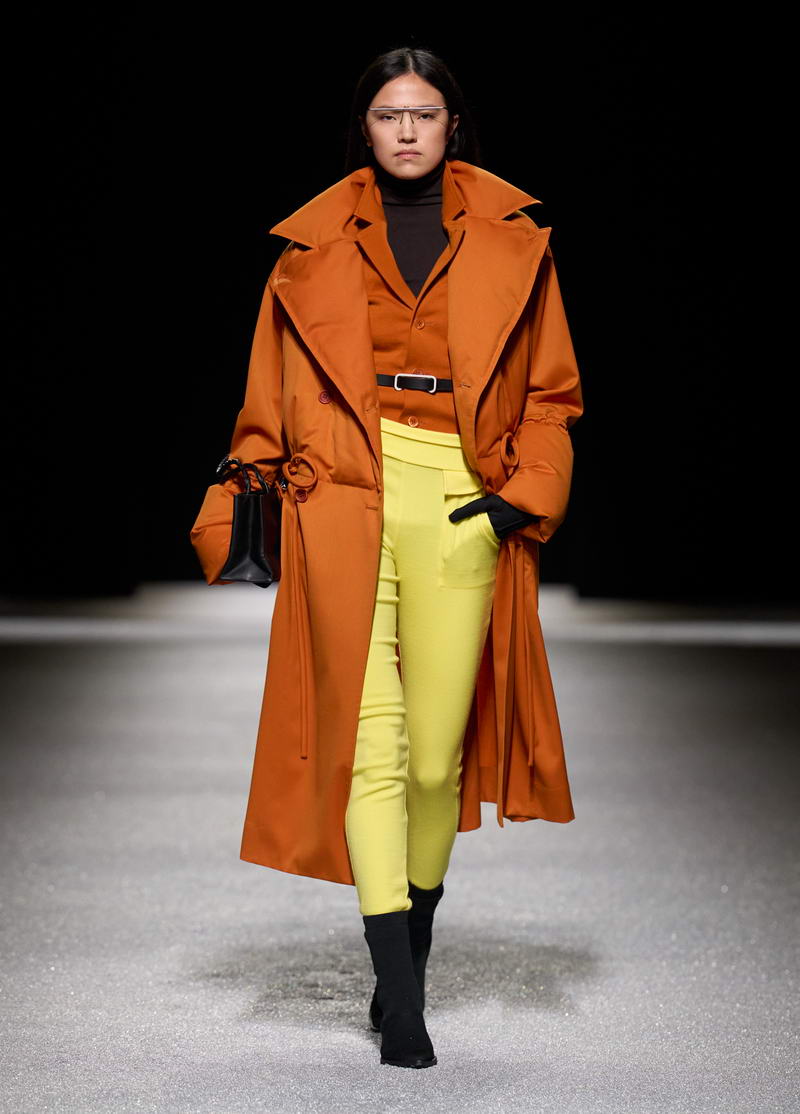
In CORRELATION, form and contrast played out through a coat retaining the integrity of a single piece of cloth, paired with a voluminous, circular skirt. The lightweight textile, woven from hollow polyester yarn and treated at low temperature, achieved a matte crispness – subtle yet striking.
CALLIGRAPH distilled the idea of form to a single, continuous gesture. A flowing piece of cloth wrapped the body in layers, not constructed but formed through an unbroken curve. Rendered in jet black and deep purple, the treated wool held its structure while allowing shadows and folds to emerge with quiet drama.
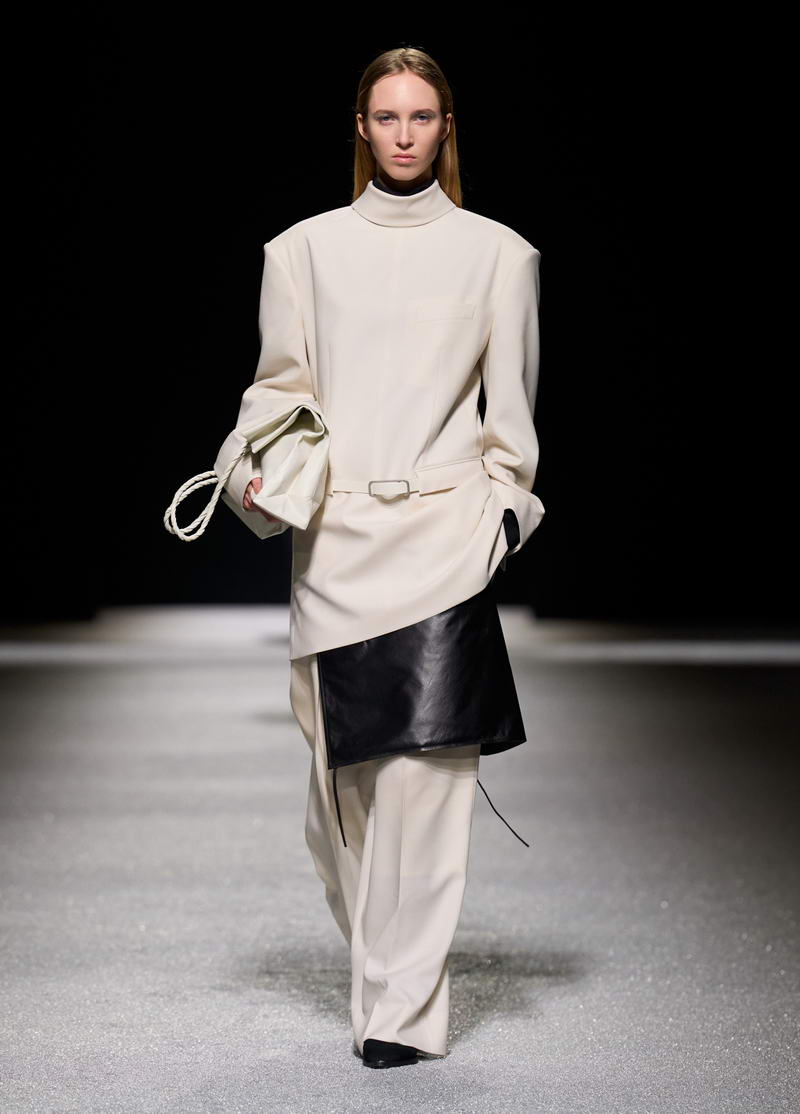
Perhaps most striking was URUSHI BODY, a modern interpretation of the obi and bustier. Crafted through a meticulous process involving hand-torn washi paper layered with natural glue and finished with lacquer, the piece embodied a fusion of tradition and technology. Its rigid shell framed the body, tracing its curves with a gentle gloss – an object as much as a garment.
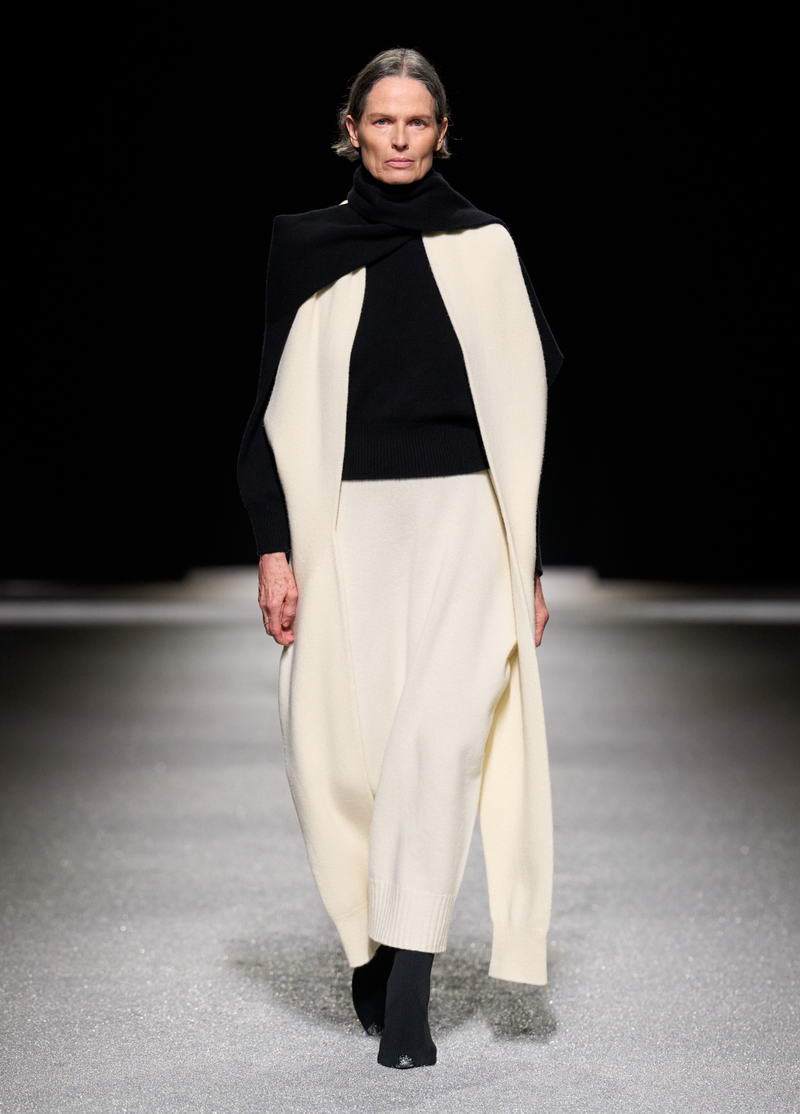
The collection extended its philosophy into footwear through a collaboration with Camper. Inspired by the sleek outsole of the Anita style, Anna introduced a sensuous, physical dimension to the partnership that previously included Peu Form and Karst Finch. Designed to be worn like a sock, its stretch-knit upper enveloped the foot, balancing softness with sculptural precision. Available in both low shoe and boot styles, it moved effortlessly between formal and casual contexts.
In Creating, Allowing, design becomes an act of listening. To materials, to space, to the body itself. It is a practice of restraint that does not diminish creativity, but deepens it – revealing a richness that can only emerge when control is loosened, and possibility is left open.