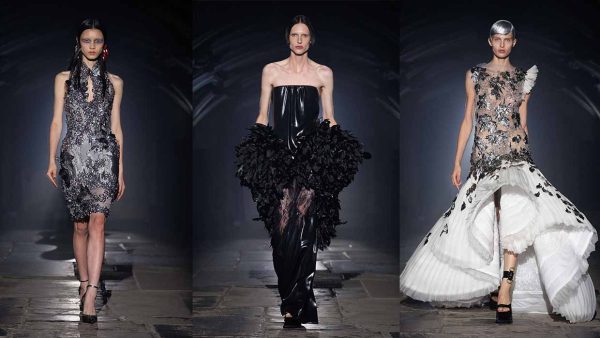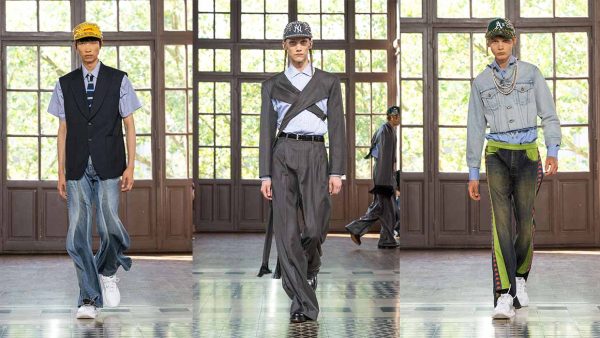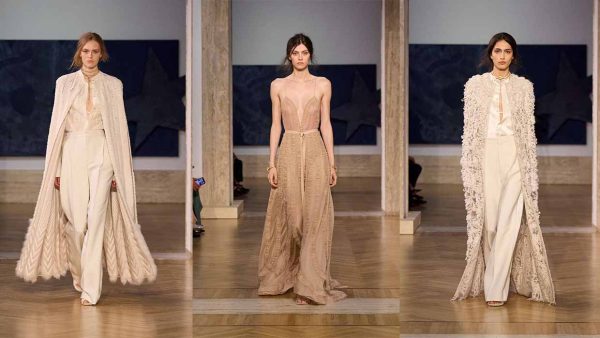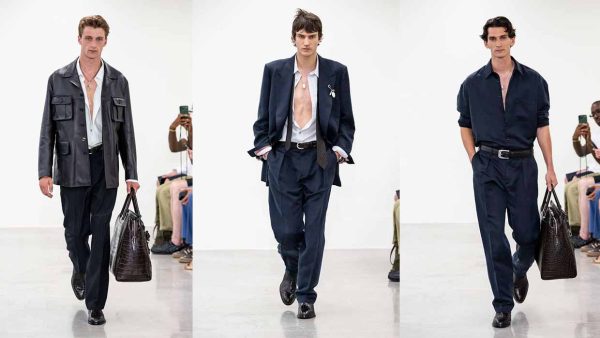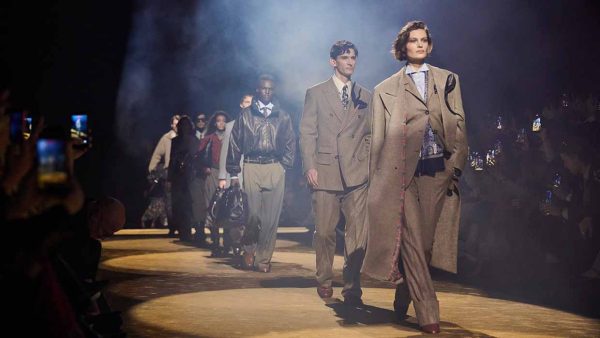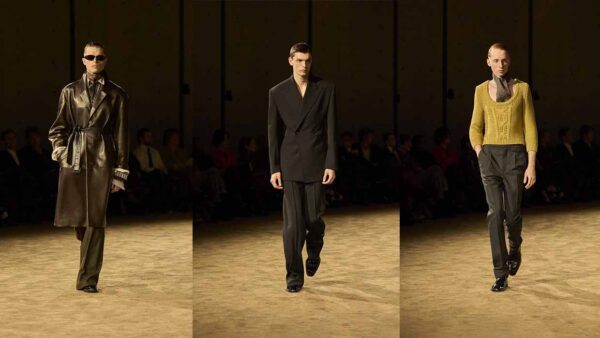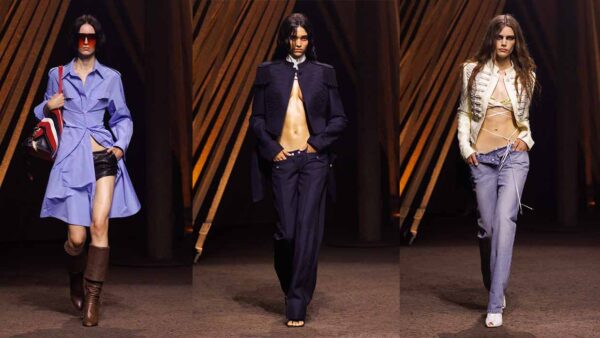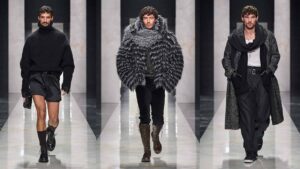
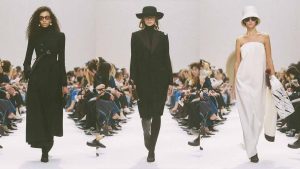
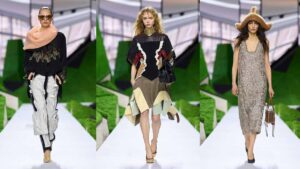
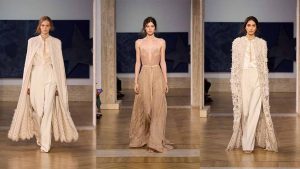

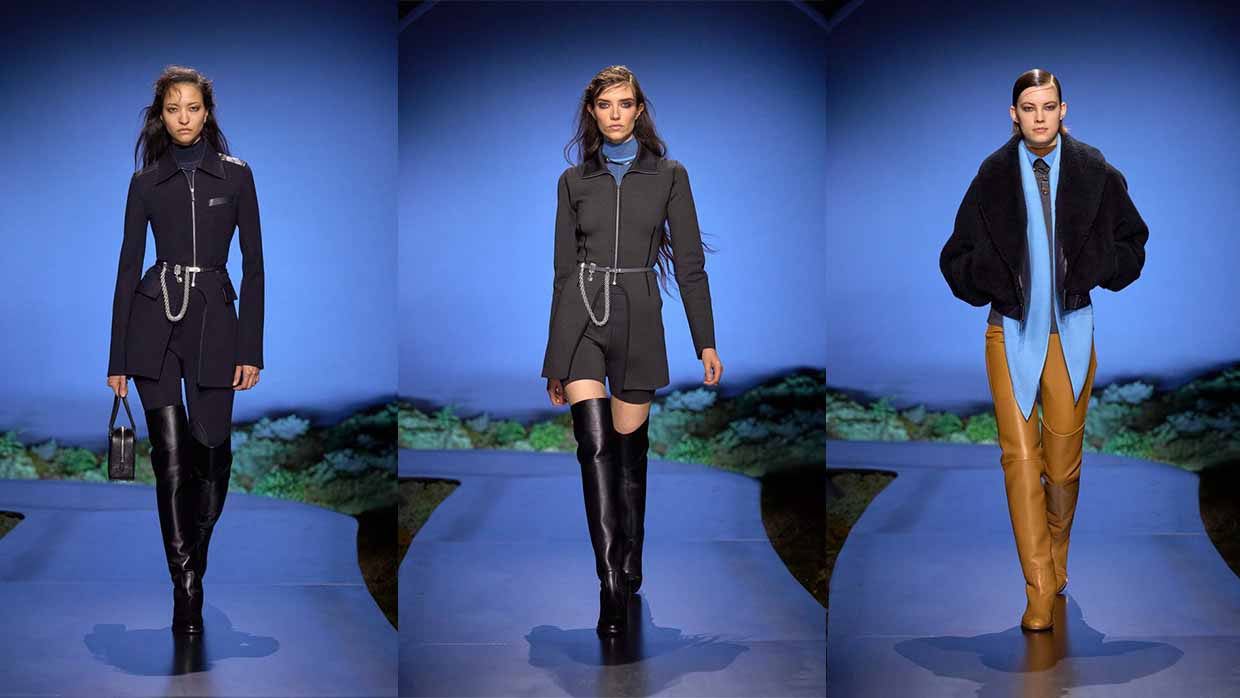
For the Fall/Winter 2026-2027 Women’s Ready-to-Wear show during Paris Fashion Week, Creative Director Nadège Vanhee-Cybulski presented a collection suspended between day and night, where shadows softened silhouettes and movement became a language of quiet authority.
The setting itself carried the emotional pulse of the collection. Moss-covered undergrowth stretched across the runway, while deep blue lighting inspired by James Turrell enveloped the space in an almost cinematic haze. It was a world of chiaroscuro and transition — a liminal realm where perception sharpened, colors shifted, and every gesture felt charged with mystery. Hermès did not merely stage a fashion show; it constructed an atmosphere of dusky sensuality and controlled motion.
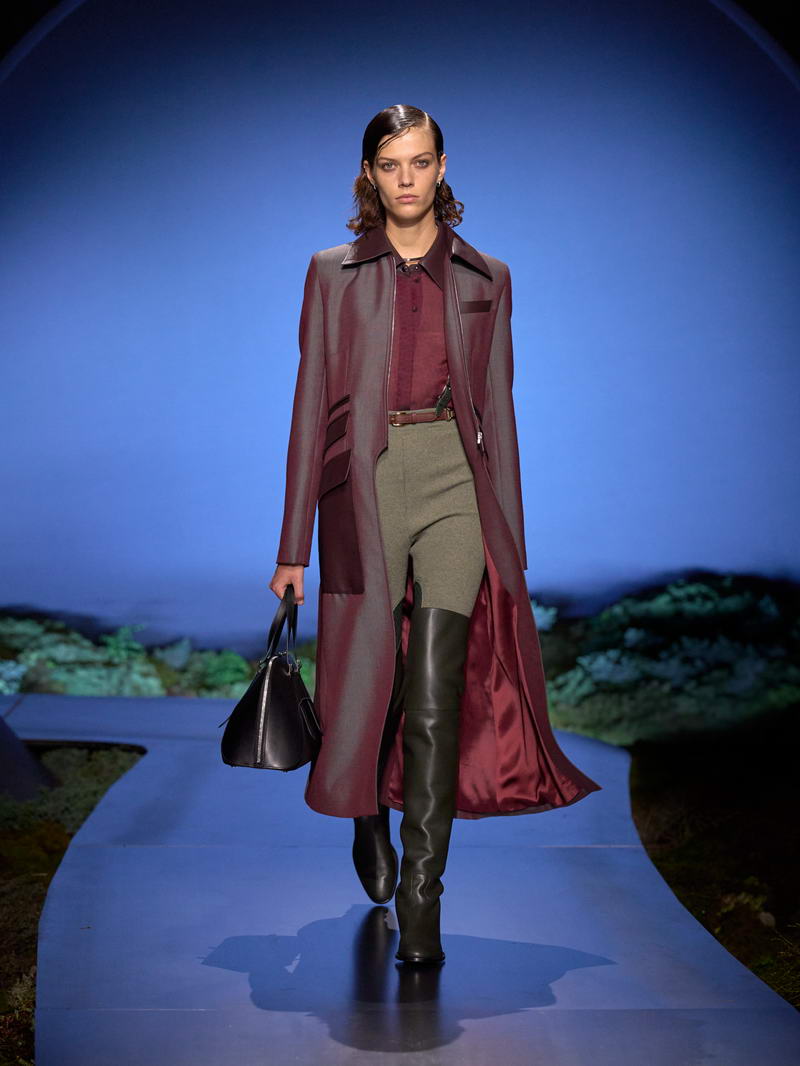
At the heart of the collection was the iconic 1951 Perspective silk scarf by A.M. Cassandre. The historic motif, depicting an abstract tower opening toward a cloud-filled vanishing point, became the graphic soul of the season. Vanhee-Cybulski manipulated the print through scaling, mirroring, rotation, and quilting, transforming it into dynamic visual architecture across garments. Zip-front shirtdresses, bombers, shirt jackets, and sculptural gilets carried the motif with hypnotic precision, while silk carrés evolved into dramatic capes edged with fur collars. As models moved through the dimly lit space, geometric diagonals and receding lines created a mesmerizing mise en abyme effect, as though the garments themselves were dissolving into infinite perspective.
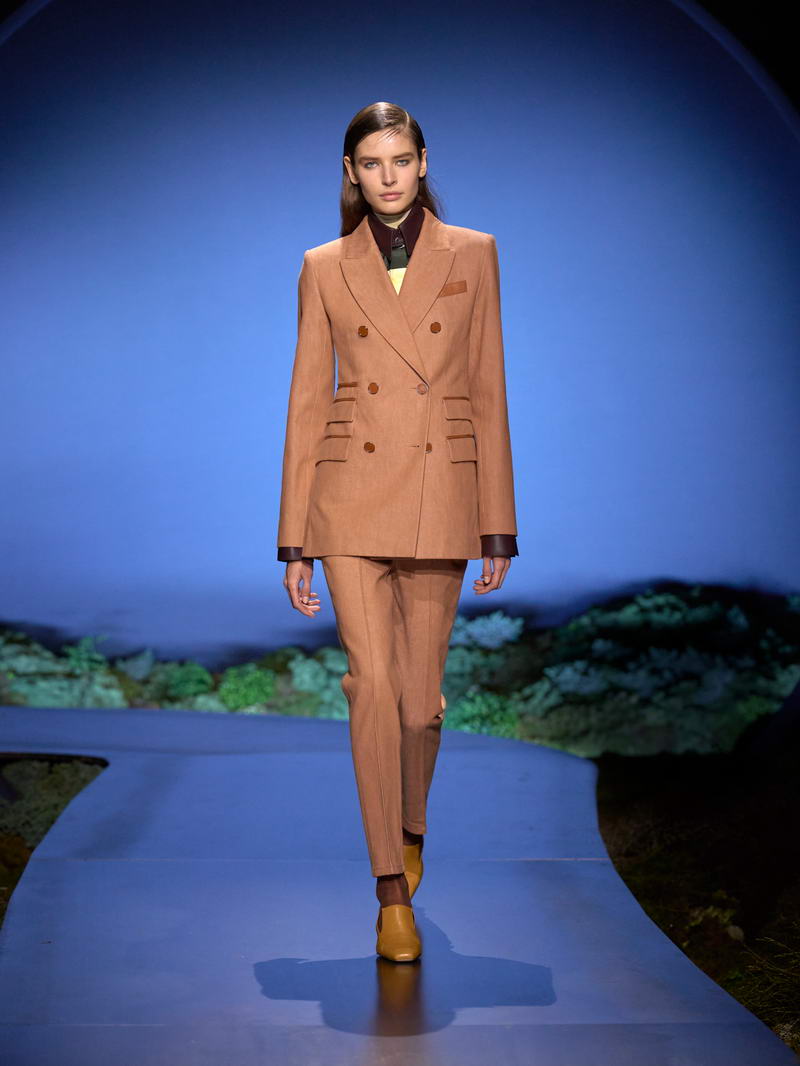
The silhouettes embodied a tension between discipline and fluidity. Lean, narrow, and aerodynamic, the looks sculpted the body while allowing freedom of movement. A-line miniskirts swayed over optional stretch shorts, while short dresses and sharply cut suits emphasized mobility and control. The collection carried subtle biker and military influences: fluid leather coats, asymmetric dresses, zip-front mini dresses, and four-pocket jackets introduced a utilitarian edge without sacrificing elegance.
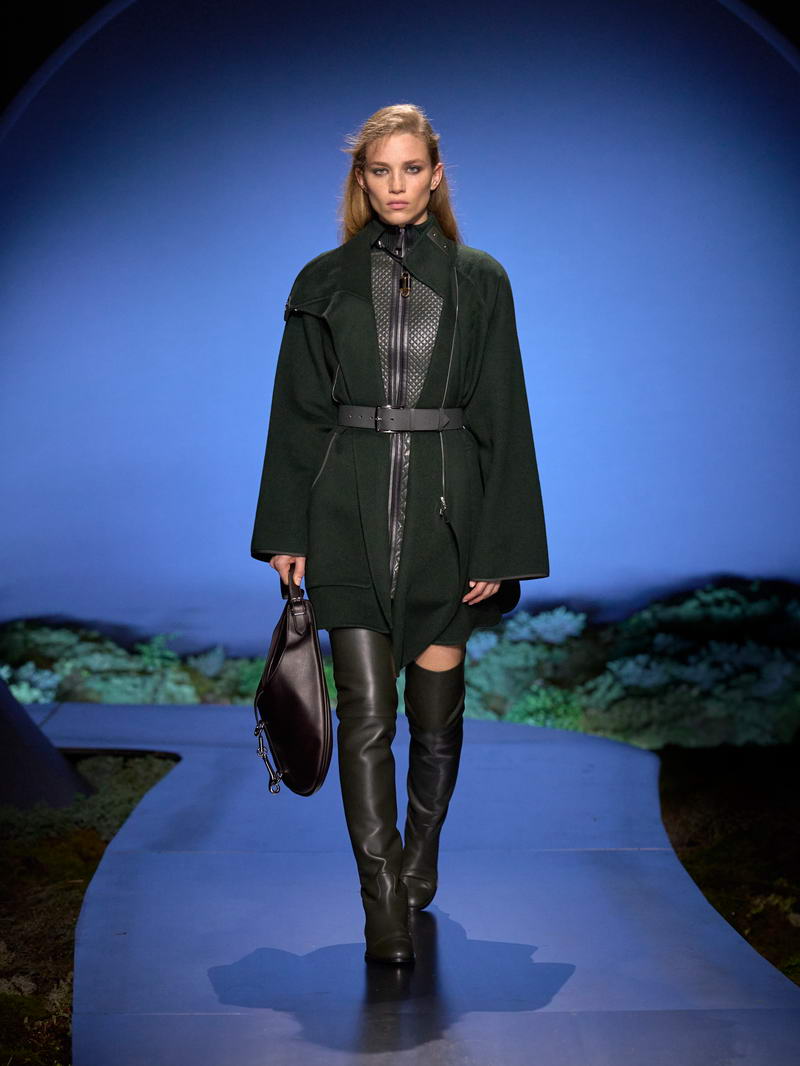
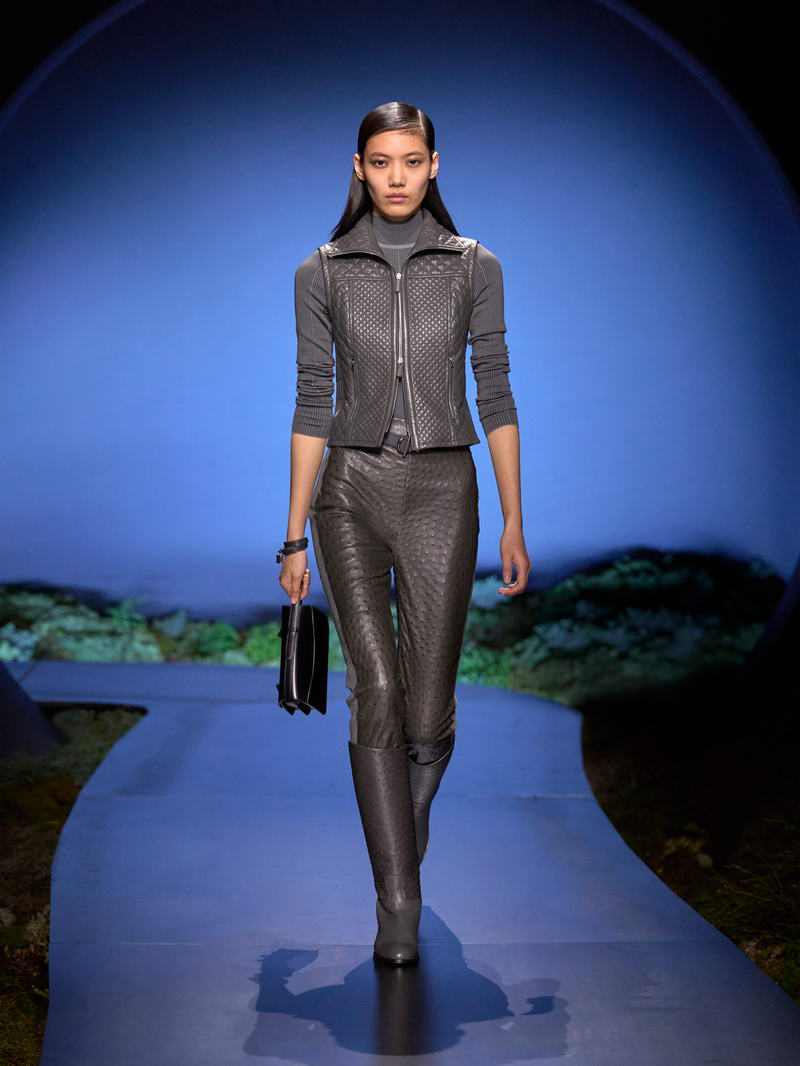
Equestrian references remained deeply woven into the narrative. Traditional trousers gave way to jodhpurs, while flat-heeled thigh-high riding boots reinforced the collection’s powerful stride. Salopettes and structured outerwear nodded to riding attire, grounding the collection in the house’s heritage while pushing it toward a more urban, nocturnal identity.
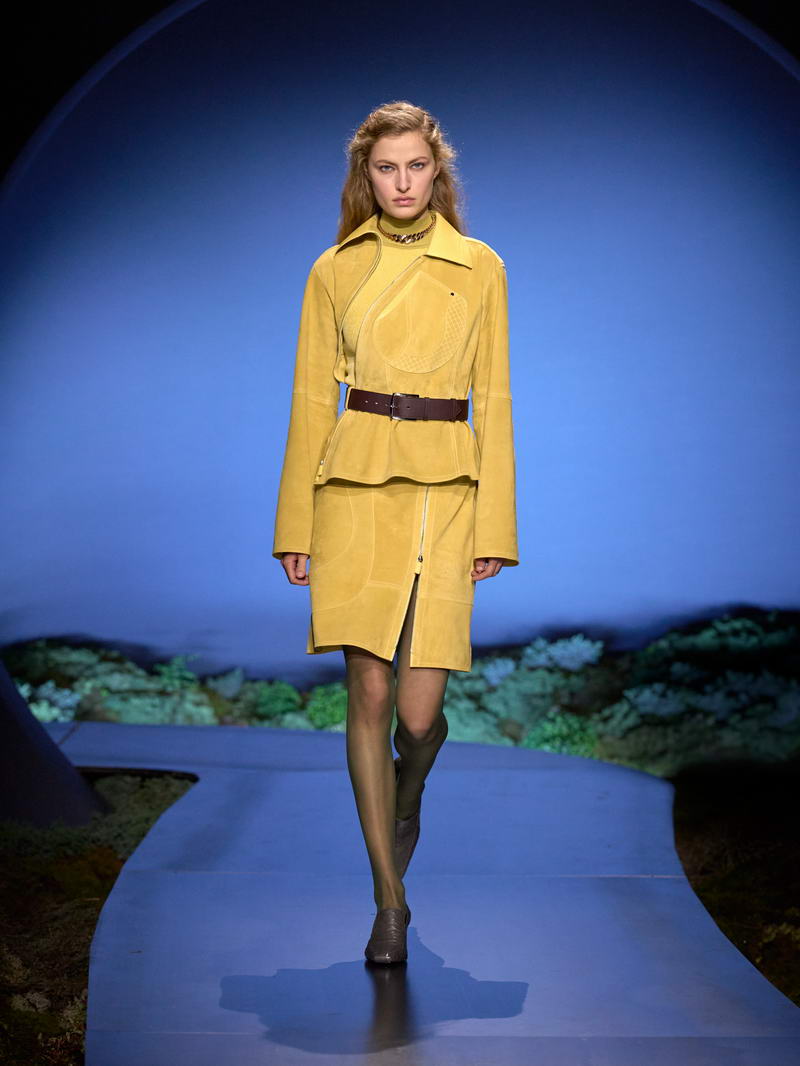
What made the collection especially compelling was its dialogue between revealing and concealing. Spiral zippers wrapped around coats at the torso and hips, allowing garments to shift shape and proportion. Removable shearling collars introduced versatility, while layering techniques created depth and transparency. Glossy leather coats floated over lighter underlayers, sheer tonal tights softened strong silhouettes, and contrasting textures added dimension to monochromatic looks.
Materiality played a defining role. Leather, long synonymous with Hermès craftsmanship, appeared sculptural yet fluid in coats, jumpsuits, dresses, and miniskirts. Ostrich leather brought tactile richness, while shearling, mohair, and knit elements introduced warmth and softness. Tonal combinations of smooth leather, shearling, ostrich, and mohair created an intricate interplay of texture that felt simultaneously luxurious and practical.
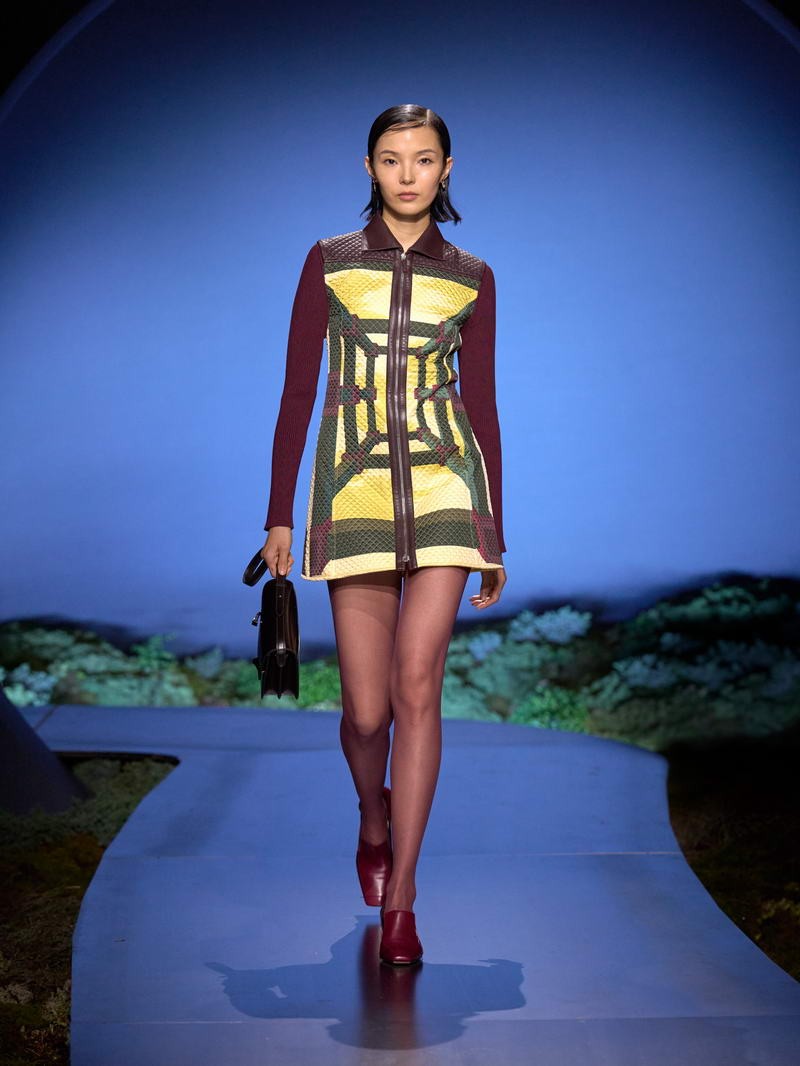
The color story unfolded like the slow descent of sunset into night. Luminous mustard and bright lemon tones evoked fading daylight before melting into oxblood, burgundy, moss green, navy, and inky blue. Charcoal black and gray-black grounded the palette in nocturnal sophistication, while flashes of corn yellow, lime green knits, and soft blue injected moments of electric contrast. Saturated color-blocking — particularly the tension between vibrant lime and deep burgundy — intensified the collection’s emotional rhythm.
Accessories reinforced the mood of discreet power. Iconic Kelly bags appeared alongside Picotins and slouchy Hobos, some rendered in exotic leathers or brighter statement shades that punctuated the darkness of the runway. Thigh-high cuissard boots elongated the silhouette, while black Cossack hats and richly colored tights in burgundy, dark green, and corn yellow heightened the collection’s after-hours allure. Geometric cuts, diagonal zippers, and printed silk scarf capes completed a wardrobe designed for movement through shadow and light.
Beauty remained understated yet atmospheric. Smoky eyes and softly sculpted contours created an editorial twilight effect, with subtle under-eye dimension adding a sense of nocturnal intensity. Hair was intentionally restrained, allowing the clothes — and the immersive environment surrounding them — to command attention.
Throughout the collection, Hermès balanced craftsmanship and heritage with modernist sensuality and practicality. Vanhee-Cybulski envisioned a woman in motion: confident, autonomous, and fully in control as she moves through shifting worlds of dusk and darkness. Rather than chasing spectacle or viral theatrics, the show resonated through atmosphere, precision, and emotional depth.
In this twilight universe, Hermès offered a vision of luxury that whispered instead of shouted — high-octane yet discreet, sensual yet disciplined, timeless yet unmistakably modern.